
By Steven Froias
Special to Love The Ave
Acushnet Avenue has always been more than a street—it’s a front door. Today, it opens widest for New Bedford’s immigrant communities, whose languages, flavors, and traditions fill storefronts and sidewalks with new energy.
But this isn’t something new. It’s the latest chapter in a story the Avenue has been telling for generations—a place where newcomers arrive, put down roots, and quietly reshape the neighborhood while chasing something better.
Drive the length of Acushnet Avenue and wander its side streets, and you can see that story layered in plain sight. The neighborhood’s past isn’t tucked away—it lives right alongside the present.
The grandeur of St. Anthony of Padua Church reflects the deep faith of the French-Canadian families who settled here in the early 20th century. The Madeira Feast grounds, the Museum of Madeiran Culture, and the Portuguese social clubs speak to a community whose traditions still define the North End.
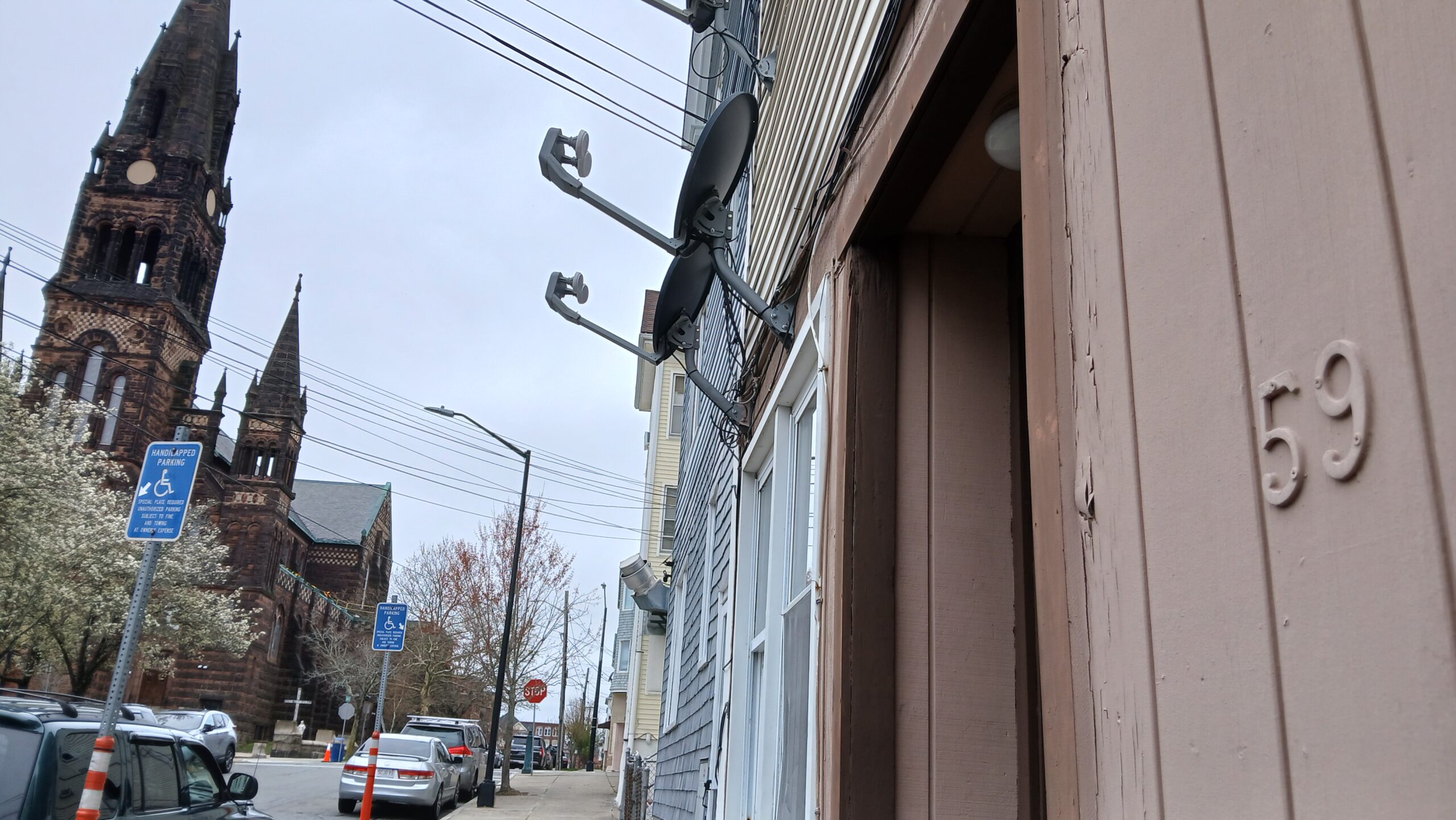
Other histories are less visible, softened by time and renovation. But they’re still there. Beneath the vinyl siding, behind updated facades, the past holds on.
Take 59 Bullard Street, just half a block off the Ave. You might pass it without a second thought. But it was once home to the Warsaw Bakery—later the Kraków Bakery—a small but vital piece of Poland in New Bedford, and a gathering place for a thriving Polish community.
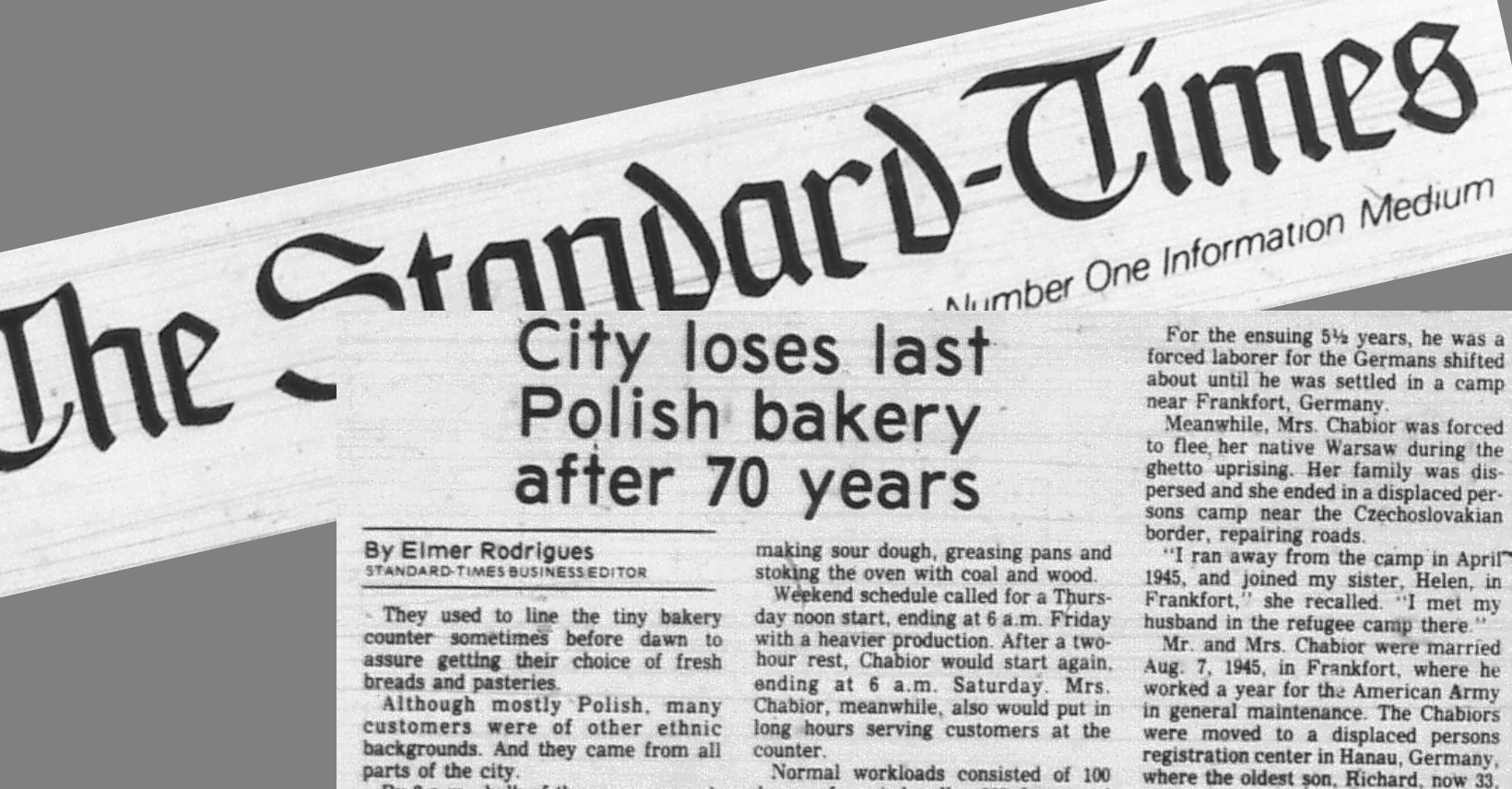
In 1978, that address made headlines in The Standard-Times: “City loses last Polish bakery after 70 years.” It sounds like an ending. In reality, it’s something closer to a milestone.
After more than two decades running the bakery, Paulina and Stefan Chabior decided it was time to step away. Yes, the aging brick oven—used for generations—had become too costly to repair. But the real reason was simpler: they had done what they set out to do.
They had built a life.
The Chabiors met in the aftermath of World War II in a refugee camp in Frankfurt, Germany—two people shaped by hardship, finding one another in uncertainty. Stefan, a baker’s apprentice from Lwów, had endured five and a half years of forced labor after being captured by German forces in 1939. Paulina fled Warsaw during the uprising and survived in a displaced persons camp, doing road work before escaping to reunite with family.
They married in 1945. Not long after, Stefan’s baking skills opened a door. The couple was allowed to immigrate to the United States, guided by the Polish diaspora to Massachusetts—and eventually to New Bedford.
He found work at Old Home Bakery on Washburn Street. Six years later, he owned his own place on Bullard Street.
What followed was the kind of grind that defines so many immigrant success stories. Long nights. Little sleep. Days that began before dawn. The bakery turned out staggering quantities—hundreds of loaves, thousands of rolls, endless pastries—feeding both neighborhood families and local businesses.
It was hard. But it was theirs.
And it worked.
The Chabiors raised three sons, all of whom went on to college and successful careers—opportunities made possible by the sacrifices baked into every loaf that came out of that oven.
So when the Kraków Bakery closed after 70 years, it wasn’t a loss in the way the headline suggested. It was proof of something enduring: that the Avenue had done its job once again.
Today, the building at 59 Bullard Street doesn’t advertise that history. But the meaning of it hasn’t disappeared. In fact, it’s all around.
Corinn Williams remembers the Kraków Bakery – especially its delicious rye bread and special cheesecakes. Of Polish heritage herself, her family once ran the New York Garment Store on Acushnet Avenue—another thread in the neighborhood’s rich fabric. Today, she serves as Executive Director of the Community Economic Development Center (CEDC), an organization dedicated to helping residents—especially immigrants—build their own futures in New Bedford.
There’s a certain poetry in what comes next.
The CEDC is now headquartered in the former Our Lady of Perpetual Help Church at 235 N. Front Street—once a spiritual home for the city’s Polish community. And in its basement, a new generation is getting to work.
The Community Kitchen—La Cocina Del Patio—offers food entrepreneurs the tools to start and grow their businesses. In 2026, many of those entrepreneurs come from Central American and Hispanic backgrounds. Their recipes, their languages, their journeys may be different—but the path feels familiar.
Long hours. Big hopes. A belief that opportunity lives here.
The names have changed. The flavors have evolved. But the rhythm of Acushnet Avenue remains the same.
History doesn’t repeat itself—but on The Ave, it comes awfully close. And the stories being written today are just as rich, just as resilient, and just as full of promise as the ones that came before.